
Announcement
Other News
BlackRock's Tokenized U.S. Treasury Fund, BUIDL, Surpasses $2 Billion in Assets
BlackRock's tokenized U.S. Treasury fund, BUIDL, has surpassed $2 billion in assets under management, highlighting accelerating institutional adoption of blockchain-based securities.
Updated Dec 14, 2025, 8:29 p.m.
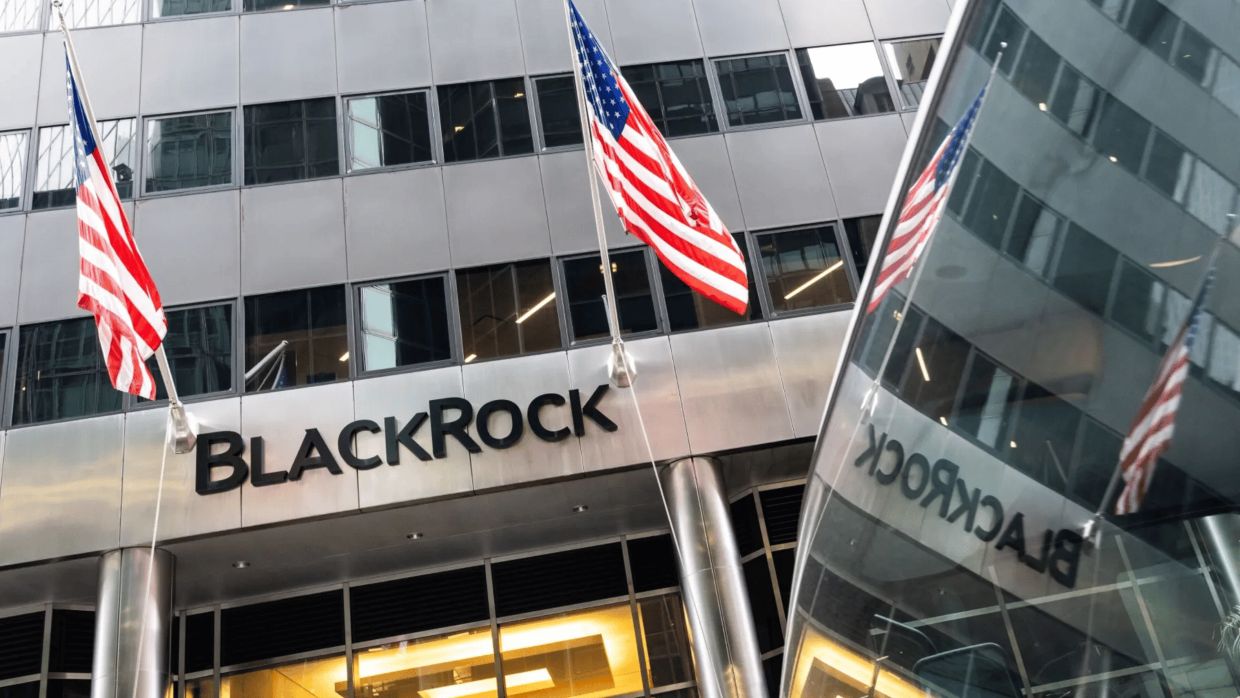
BlackRock's tokenized U.S. Treasury fund, BUIDL, has now grown to more than $2 billion in assets under management. Launched in March 2024, the fund provides on-chain access to short-term U.S. Treasury bills and repurchase agreements, distributing yield directly via the Ethereum blockchain. The scale of this growth — achieved in under a year — positions BUIDL as one of the most significant real-world asset (RWA) tokenization initiatives to date.
While the underlying securities are traditional, BUIDL's structure represents a new operational model. Tokenized shares settle faster than legacy fund units, ownership is recorded transparently on-chain, and the product is fully integrated with institutional compliance and custody frameworks. For the world's largest asset manager to deliver such a product at scale marks a notable milestone in the convergence of traditional finance and blockchain infrastructure.
This rapid ascent reflects three converging forces shaping the market:
- Institutional entry into tokenization – Large asset managers are now deploying blockchain rails for regulated, income-producing instruments, moving tokenization from pilot projects to operational reality.
- Investor demand for on-chain yield – With interest rates elevated, tokenized treasuries provide stable, dollar-denominated returns without the volatility of crypto-native yield products.
- Infrastructure maturity – Institutional-grade custody, KYC/AML integration, and compliance-ready smart contracts now meet the standards required for multi-billion-dollar operations on public networks.
BUIDL's scale is a proof-of-concept for tokenization at an institutional level. It shows that blockchain can be used to manage billions of dollars in regulated securities while improving settlement efficiency and transparency. As adoption grows, the boundaries between "crypto" and "traditional finance" are likely to fade, with public blockchains handling an increasing share of conventional capital markets activity.
The success of BUIDL also points toward new opportunities for liquidity and collateral integration. Tokenized treasuries could be used in lending markets, to back stablecoins, or as low-risk assets in DeFi protocols. Over time, similar structures could expand to retail investors, providing broader access to secure, income-producing instruments on-chain.
For the blockchain ecosystem, it marks another step toward integrating real-world assets into on-chain economies.


All metrics, including index values, reserve data, proof-of-reserve calculations, and protocol statistics, are provided for informational purposes only and are subject to change. On-chain data and reserve disclosures are based on automated reporting mechanisms and may not reflect real-time conditions.
Participation in the protocol involves risk, including but not limited to market volatility, execution risk, liquidity constraints, smart contract risk, custodial risk, and third-party dependency risk. Historical or displayed metrics are not indicative of future performance.
Users are solely responsible for assessing the suitability of the protocol for their own circumstances and should seek independent professional advice where appropriate.