
Announcement
Other News
Market News
The SEC Has Spoken: Most Crypto Assets Are Not Securities — What This Means for On-Chain Finance
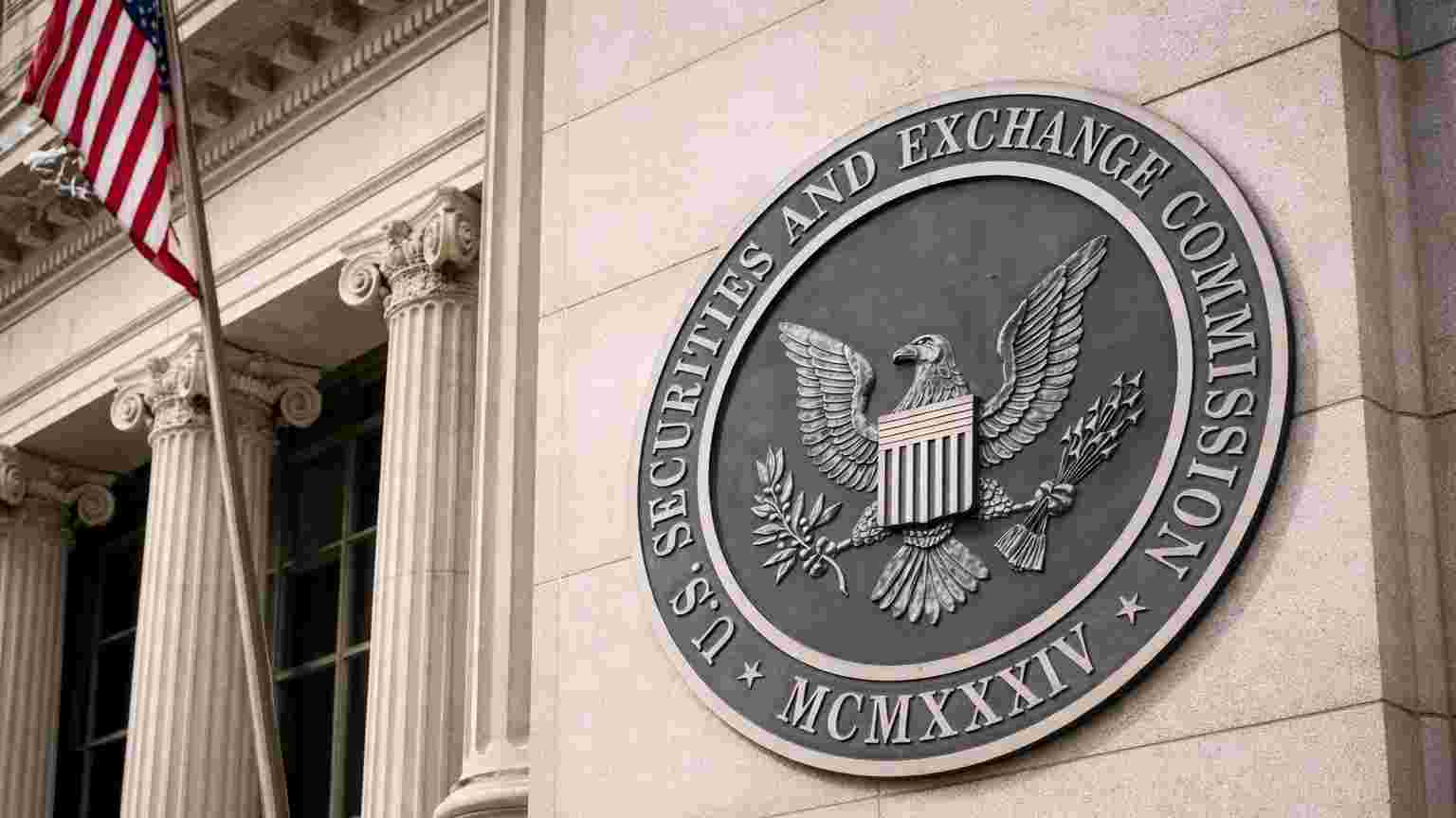
In a watershed moment for the digital asset industry, the SEC and CFTC issued joint guidance on March 17, 2026, formally classifying Bitcoin, Ethereum, Solana, XRP, and most crypto assets as digital commodities — not securities. After more than a decade of regulatory ambiguity, the rules of the game have finally been written.
Updated Mar 18, 2026, 9:53 a.m.
Source: U.S. Securities and Exchange Commission Press Release, March 17, 2026.
The Guidance in Brief
On March 17, 2026, the Securities and Exchange Commission and the Commodity Futures Trading Commission released coordinated guidance establishing a formal classification framework for crypto assets. The key categories defined are:
- Digital Commodities — Bitcoin, Ethereum, Solana, XRP, BNB, and the majority of established crypto assets
- Stablecoins — treated separately from securities, with their own regulatory pathway
- Collectibles and Tools — NFTs and utility tokens, outside the scope of securities law
- Securities — the narrowest category, reserved for assets that meet the full definition under existing law
Critically, the guidance explicitly exempts common crypto activities — including staking, airdrops, and on-chain yield mechanisms — from securities regulation. This removes one of the most significant legal grey areas that has constrained DeFi product development for years.
SEC Chair Atkins and CFTC Chair Selig both welcomed the ruling as the end of a decade of regulatory confusion — and the beginning of a new chapter for the industry.
Why This Matters to the Broader Market
The immediate significance of this guidance cannot be overstated. For years, the lack of clear classification deterred institutional capital, limited product development, and created compliance risk for protocols operating in good faith.
That uncertainty is now resolved — at least at the federal level in the United States:
- Financial institutions can now build digital asset products with legal confidence
- DeFi protocols offering staking and yield products operate with explicit regulatory clarity
- Institutional investors who were waiting for this clarity have one less reason to stay on the sidelines
- The pathway for tokenized assets, on-chain financial products, and crypto-native infrastructure just widened considerably
Stablecoin payment volumes already reached $350 billion in 2025. With regulatory clarity now in place, the conditions for the next phase of growth are set.
The OMP Perspective
The CMI — One Metric Protocol's Crypto Market Index — tracks 13 of the world's leading digital assets, including Bitcoin, Ethereum, Solana, XRP, and BNB. Every asset in the CMI basket has now been formally recognised as a digital commodity under U.S. regulatory guidance.
This matters for two reasons.
First, it validates the asset class that the CMI is built on. The underlying constituents of the index are not speculative instruments operating in legal grey zones — they are classified financial commodities, the same category as oil, gold, and wheat.
Second, regulatory clarity accelerates everything downstream. More institutional participation, deeper liquidity, more infrastructure investment, and broader public confidence in crypto as a legitimate financial category — all of these benefit the long-term case for an index product that provides broad, transparent market exposure.
The groundwork being laid right now — by regulators, by payment networks, by financial institutions — is the same groundwork that makes instruments like OMP increasingly relevant to a broader audience.
What Comes Next
The guidance sets the stage but does not resolve everything. Concrete legislation, cross-jurisdictional alignment, and implementation frameworks will take time. But the directional signal from the U.S.'s two most powerful financial regulators is unambiguous:
The digital asset industry has earned its place in the mainstream financial system. The rules are being written to reflect that reality — not to prevent it.


All metrics, including index values, reserve data, proof-of-reserve calculations, and protocol statistics, are provided for informational purposes only and are subject to change. On-chain data and reserve disclosures are based on automated reporting mechanisms and may not reflect real-time conditions.
Participation in the protocol involves risk, including but not limited to market volatility, execution risk, liquidity constraints, smart contract risk, custodial risk, and third-party dependency risk. Historical or displayed metrics are not indicative of future performance.
Users are solely responsible for assessing the suitability of the protocol for their own circumstances and should seek independent professional advice where appropriate.